Is “THC-Free” Marketing or a Real Standard?
“THC-free” sounds definitive. It suggests a product contains no tetrahydrocannabinol—the intoxicating cannabis compound most shoppers have in mind—and that the claim rests on something more concrete than a label. But the phrase does not always mean absolute zero, and there is no single, universal testing standard that makes every “THC-free” claim equivalent.
That distinction matters as wellness language moves into fashion and lifestyle branding. Products once framed for occasional indulgence are increasingly sold as part of a daily routine: a balm in a gym bag, a tincture beside the bedside lamp, a soft layer worn from the commute through the wind-down. Everyday use can make a brand more present in a customer’s life. It also makes clear product information more important. A daily ritual deserves more than reassuring copy; it deserves evidence shoppers can inspect.
The practical question is not only whether a label says “THC-free.” It is what the company means by the phrase, what method it used to test the product, and whether a batch-specific lab report supports the claim. For shoppers researching THC-free meaning, those details separate a useful standard from a marketing shortcut.
quiet luxury wellness aestheticWhat Does “THC-Free” Mean?
In everyday conversation, “THC-free” can sound like a claim of absolute absence. In product marketing, it may mean that THC was not detected by a particular test, that the product contains less than a stated threshold, or that the formulation was made without intentionally adding THC. Those are different claims, and they are not interchangeable.
There is no one definition that applies across every product category and jurisdiction. Hemp laws and product rules can set specific THC limits, but a legal limit is not the same thing as a promise of zero THC. For example, a threshold used to define hemp is a regulatory classification, not proof that a finished consumer product contains no THC. The relevant rules can also depend on the product, its ingredients, where it is sold, and the applicable law.
That is why a label should not be treated as the full explanation. A more informative brand will clarify whether “THC-free” means “not detected,” identify the test and its limits, and make supporting results available. If a company uses the phrase without defining it, shoppers are left to guess what level of certainty it is offering.
“Non-Detectable” Is Not the Same as Absolute Zero
Non-detectable THC is a useful phrase, but it needs context. A laboratory test does not establish that a substance is absent in every possible sense. It reports whether the substance was detected above the method’s detection limit in the sample tested. A different method, a more sensitive instrument, or a different sample could produce a different result.
Two terms are worth looking for on a certificate of analysis, or COA:
- Limit of detection (LOD): The lowest level at which the method can reliably detect the compound.
- Limit of quantitation (LOQ): The lowest level at which the method can reliably quantify the compound with stated accuracy.
If THC is reported as “ND,” “not detected,” or “below the limit,” the report should make clear which threshold applies. “Not detected” without an LOD can sound more conclusive than the result warrants. Likewise, a result described as “less than” a value is not the same as a result of zero; it means the amount is below the stated reporting threshold.
Shoppers should also note which THC compounds the panel covers. A report that tests only one Browse around this site form of THC may not answer every question a buyer has. The panel should specify the analytes tested, and the brand should explain how the report relates to the product’s “THC-free” wording. When the language on the package is broad but the lab panel is narrow, that gap is worth asking about.
What Counts as Lab Report Proof?
A lab report is only useful if a shopper can connect it to the product in hand. The strongest consumer-facing evidence is a current, batch-specific COA that names the product, identifies the batch or lot number, shows the relevant cannabinoid results, and provides enough method information to interpret the findings.
That is the difference between lab report proof and a general claim that “our products are tested.” A testing statement may describe a company policy, but it does not show the result for a particular lot. A report for a different product or an old batch is not a substitute for the batch being sold now.
A quick checklist for a COA
- Match the batch: Compare the lot or batch number on the package with the number on the report.
- Check the product name and date: Confirm the report is for the same formulation and is recent enough to be relevant to that batch.
- Read the cannabinoid panel: See which THC analytes were tested and whether results are listed as a number, “ND,” or below a stated threshold.
- Look for method limits: Find the LOD or LOQ, or ask the brand where those details can be found.
- Check who performed the test: Look for the laboratory’s name and contact information. If accreditation or independence is important to the claim, verify what the report says rather than assuming it.
- Make sure the link works: A QR code or product-page link should lead to the relevant report, not simply to a homepage or general testing explanation.
A responsible brand should not make customers work too hard to find this information. It can explain its testing policy in plain language, link the current COA from the product page, and offer a contact route for questions. Clear disclosure does not guarantee that a product is right for every person, but it gives buyers a better basis for deciding.
Why This Claim Matters in a Daily-Ritual Economy
Luxury once tended to be attached to occasions: a special purchase, a formal outfit, a rare treatment, a night out. More lifestyle brands now sell a different promise—the pleasure of using something every day. Wellness language has joined that shift, appearing in product descriptions built around rest, recovery, softness, calm, and routine.
Fashion has helped normalize the change. Brands such as lululemon have made comfort-first design familiar in settings beyond a workout, where stretch, practical construction, and tactile feel can be part of an everyday wardrobe. That broader context is useful when looking at wellness products too: sensory details and repeat use can matter as much as a dramatic, occasion-specific pitch.
But a pleasant texture or a soothing brand voice cannot verify a chemistry claim. The more a product is positioned as a daily companion, the more often a shopper may encounter the label—and the more valuable clear evidence becomes. A claim should remain measurable even when the brand story is about mood or ritual.
This is also where language can blur categories. “Rest day” can shift from a schedule note into a product category; “recovery” can move from a description of a routine to an implied benefit. Wellness terms may be evocative, but they do not replace specifics about ingredients, testing, or what the product is intended to do. For a THC-free product, “tested” is only the beginning of the conversation. Tested for what, by whom, at what detection limit, and for which batch?
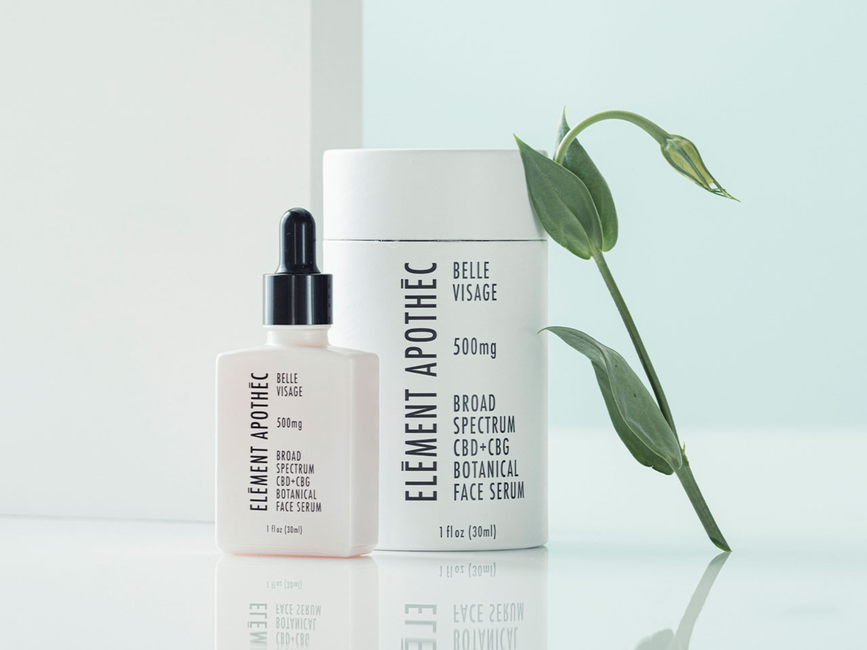
Comfort-First Design and the Sensory Sell
Comfort-first design is not limited to clothing. In lifestyle products, it can mean a balm that spreads easily, packaging that is easy to open, a scent that is not overpowering, or a format that fits into an established routine. These are legitimate product considerations. They can also make marketing feel personal and intimate, which is why a factual claim tucked into the same copy deserves extra scrutiny.
A useful way to assess a product page is to separate two kinds of information:
What the brand describes What a shopper can verify What to look for Sensory experience, such as texture, scent, or ease of use Whether the details are specific and consistent across the page Clear descriptions, ingredient lists, and practical use instructions “THC-free” or “non-detectable THC” Whether a relevant batch result supports the claim A matching COA, analyte panel, and stated detection or quantitation limits Wellness or routine language Whether the wording is distinct from evidence about product composition Plain explanations, appropriate qualifications, and no vague substitute for testingPresentation can help shoppers navigate that information. A brand using Squarespace, for instance, can organize its site structure so product details, ingredient information, testing policy, and batch reports are easy to reach. Squarespace is a publishing and commerce tool, not evidence of product quality; the value lies in how clearly the brand uses the site and its assets. A polished page that buries the COA is still a polished page with a transparency problem.

How to Read Brand Transparency Without Guessing
Some companies make lab results part of their public-facing product information. Joy Organics is one example shoppers may encounter when comparing CBD brands and their testing disclosures. As with any company, buyers should examine the specific product and current batch rather than treating a brand name or a general testing statement as proof for every item. The same rule applies across the category: assess the document, not just the reputation.
It helps to think of a product claim as a short chain of evidence. The package makes the claim; the product page explains it; the COA supports it; and the batch number connects the document to the item being purchased. If one link is missing, the shopper has less information. If the company gives a clear answer about the gap, that is useful; if it responds with more adjectives, it has not answered the question.
For editorial or brand publishing, a linked Substack profile can provide a place for longer explanations, updates, or reporting notes. But a profile link should not replace the product-level evidence. A general article about a brand’s philosophy cannot stand in for the COA attached to a specific lot. Similarly, a site’s content architecture—whether built on Squarespace or another platform—should make it easier to find source documents, not merely tell a more compelling story.
Questions to Ask Before You Buy
- Does “THC-free” mean no THC was detected, or that the product is below a specified threshold?
- Which forms of THC were included in the test?
- What are the test’s LOD and LOQ?
- Can I view a COA for the exact batch or lot I am buying?
- Does the report identify the laboratory, product, date, and testing method?
- Does the company explain the difference between a legal THC limit and a non-detect result?
These are ordinary consumer questions, not a demand for a chemistry degree. A brand that uses a technical phrase in its marketing should be prepared to explain it in language customers can understand.
So, Is “THC-Free” Marketing or a Real Standard?
It can be either—or a combination of both. “THC-free” is a marketing phrase unless the brand defines what it means and supports the definition with relevant, accessible testing. “Non-detectable THC” can be a more precise description, but only when the report shows what was tested and the detection limit behind the result. Neither phrase, by itself, proves absolute zero.
The best approach is to treat the label as a prompt to check the evidence. Look for a current, batch-specific lab report; read the panel and its limits; and make sure the claim matches what the report actually says. That standard of scrutiny fits the way people shop now. If a product is meant to be part of an everyday ritual, its transparency should be designed for everyday use too.
Comfort, convenience, and sensory pleasure can make a product worth returning to. Clear documentation makes the trust behind that routine more than a mood. In a market where wellness language is increasingly woven into fashion and lifestyle branding, the most convincing claim is not the most luxurious-sounding one. It is the one a shopper can check.