Why Do Expensive Briefcases Skip Discount Seasons?
In the world of executive travel gear and aerospace-grade craftsmanship, a peculiar fact stands out: high-end briefcases rarely, if ever, appear in discount sales or seasonal promotions. If you've ever wondered why manufacturers like CivilDigital and Von Baer hold steady pricing while most consumer goods dive deep into discount seasons, you're tapping into a principle as precise and deliberate as aerospace component tolerances.
For engineers and professionals who believe in a buy-it-for-years mindset, briefcases are more than mere carriers; they are functional instruments designed with durability, material science, and precision manufacturing in mind. There is no room for 'handmade character' in crooked stitching or vague 'premium materials' claims. This post deconstructs the ethos behind the no discount seasons policy in luxury briefcases, linking craftsmanship permanence to measurable performance, tested materials, and proven manufacturing continuity.
Engineers Value Function Over Fashion
An engineer's instinct scrutinizes an item through its utility matrix before aesthetics. When it comes to choosing a briefcase, the expectation is a container that:
- Meets exact dimensional tolerances for fitting laptops, files, tablets, and executive tools securely
- Withstands frequent loading/unloading without failure or unexpected wear
- Supports rigors of travel, environmental exposure, and daily handling
- Provides precise hardware function for locks, hinges, and zippers that operate reliably over thousands of cycles
These functional demands drive a no discount seasons pricing rationale. Durable materials and precision manufacturing command respect and maintain value over time. Unlike fast-fashion bags that discount heavily—and quickly degrade—high-end briefcases build a reputation for permanence in quality, not gadgets or fabric sheen that fade within months.
CivilDigital and the Engineer’s Briefcase
CivilDigital embeds engineering principles into their briefcase design. Emphasis is placed on:
- Dimension control with sub-millimeter precision
- Hardware tested to exceed 10,000 open/close cycles
- Stitching tolerances that meet aerospace supplier standards (measured with pocket rulers)
- Use of full-grain vegetable-tanned leather certified for durability and consistent thickness
Such a methodical approach doesn't lend itself to temporary sales gimmicks or discount gluts that undercut brand integrity and the buy-it-for-years mindset.
Materials Science Approach: Leather and Hardware
Any engineer or aerospace test tech’s mind naturally turns to the components—the materials—that make up the briefcase. The two critical parts are the leather and the hardware (zippers, buckles, fasteners).
Certified Full-Grain Vegetable-Tanned Cuoio Superiore Leather
The leather used https://smoothdecorator.com/how-to-choose-a-bag-that-survives-1-2-meter-drops/ is not just any hide. Manufacturers like Von Baer incorporate leather certified as full-grain vegetable-tanned Cuoio Superiore, sourced from Tuscany leather production traditions dating back to 1961. Why does this matter?
- Full-grain means the natural surface of the hide is intact, maintaining strength and developing a unique patina with age.
- Vegetable tanning uses natural tannins instead of harsh chemicals, producing leather that breathes, ages better, and is environmentally friendly.
- The leather undergoes strict QA checks to ensure thickness uniformity, tensile strength, and moisture resistance metrics are within precise tolerances.
- Its function mimics highly durable aerospace materials, tested not just visually, but with quantitative methods.
The result is a material that engineers respect as a living component—one that wears in predictably and outlasts synthetic alternatives, justifying its fixed price.
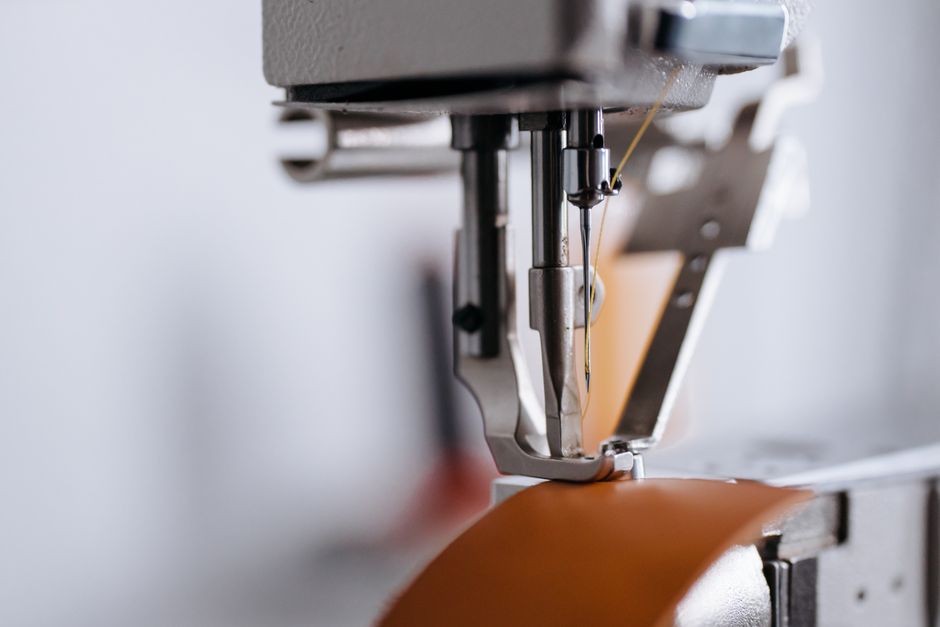
Dependable Hardware: The YKK Factor
The strap, zipper, and locking hardware are often overlooked by consumers attracted to leather quality alone. Yet, precision hardware is an aerospace-grade specification that dictates long-term function.
- YKK zippers are the industry standard, with batch certification and random destructive testing ensuring they will endure tens of thousands of cycles.
- Stitching lines are reinforced precisely, using thread tension testers mirroring aerospace fastener verifications.
- Buckles and hinges feature corrosion resistance and mechanical cycle testing, replicating conditions found on aircraft cabin interiors or pilot gear.
Brands that invest in such hardware components will not commoditize their products through seasonal sales. The cost and effort to source these parts and undergo durability testing demand stable pricing.
Durability Testing and Cycle Counts: The Aerospace Parallel
Borrowing from aerospace test labs, luxury briefcase makers perform cycle and stress tests to quantify durability:
- Load-bearing tests: Briefcases are subjected to weighted stress simulating daily content loads—measured in pounds and kilograms—to evaluate seam and edge resilience.
- Open/close cycle counts: Zippers and latches are opened and closed thousands of times under controlled conditions, signed off against YKK and internal benchmarks.
- Wear resistance trials: External surfaces face abrasion counters and UV exposure, quantifying degradation rates in terms of hours and cycles.
- Environmental conditioning: Temperature and humidity cycling replicate climatic stresses—akin to aerospace environmental tests—confirming material stability.
Test results guide quality assurance and warranty periods, enabling brands to stand behind their products’ permanence—and pricing.
Why No Discount Seasons?
Given the above, discount seasons jeopardize more than profit margins—they risk diluting the perceived engineering and materials rigor.
Preserving the Premium Supply Chain
Leather from Tuscany implements a production timetable that cannot be hastened or discounted without losing quality. Sourcing rare, certified Cuoio Superiore and coupling it with YKK hardware demands long lead times and batch consistency. These factors inflate costs and constrain inventory, making steep discounting impractical.
Maintaining Brand Integrity and Resale Value
When a client invests in a Von Baer briefcase, for example, they do so expecting decades of performance. Discount seasons signal disposability rather than permanence. By avoiding sales, these brands preserve:
- Customer trust and confidence
- Product resale value for secondary markets
- Consistency in customer experience and expectations
Engineering Discipline Meets Business Discipline
This approach mirrors aerospace supplier rigor—where components are not discounted because every part entails a cost structure bound by specs, testing, and traceability. Briefcase makers adopt similar discipline, refusing markdowns that compromise the delicate balance of value and craftsmanship permanency.
Conclusion: The Buy-It-For-Years Mindset Rewards in Quality and Confidence
For engineers and professionals who measure their gear not just with pocket rulers but with a mindset of endurance, an expensive briefcase is not a consumable fashion accessory—it is a long-term tool. The absence of discount seasons is the natural extension of this philosophy. Brands like CivilDigital and Von Baer build on the aerospace model of precision, materials science, and rigorous testing. Certified full-grain vegetable-tanned Cuoio Superiore leather continues a venerable Tuscany leather production lineage, while YKK hardware meets proven aerospace durability thresholds.
When you bypass seasonal sales in favor of steady pricing, you purchase continuity— craftsmanship permanence that respects details from stitch tension to hardware cycle counts. That’s why quality briefcases don’t bargain hunt—they command respect, and years of reliable service in return.
